

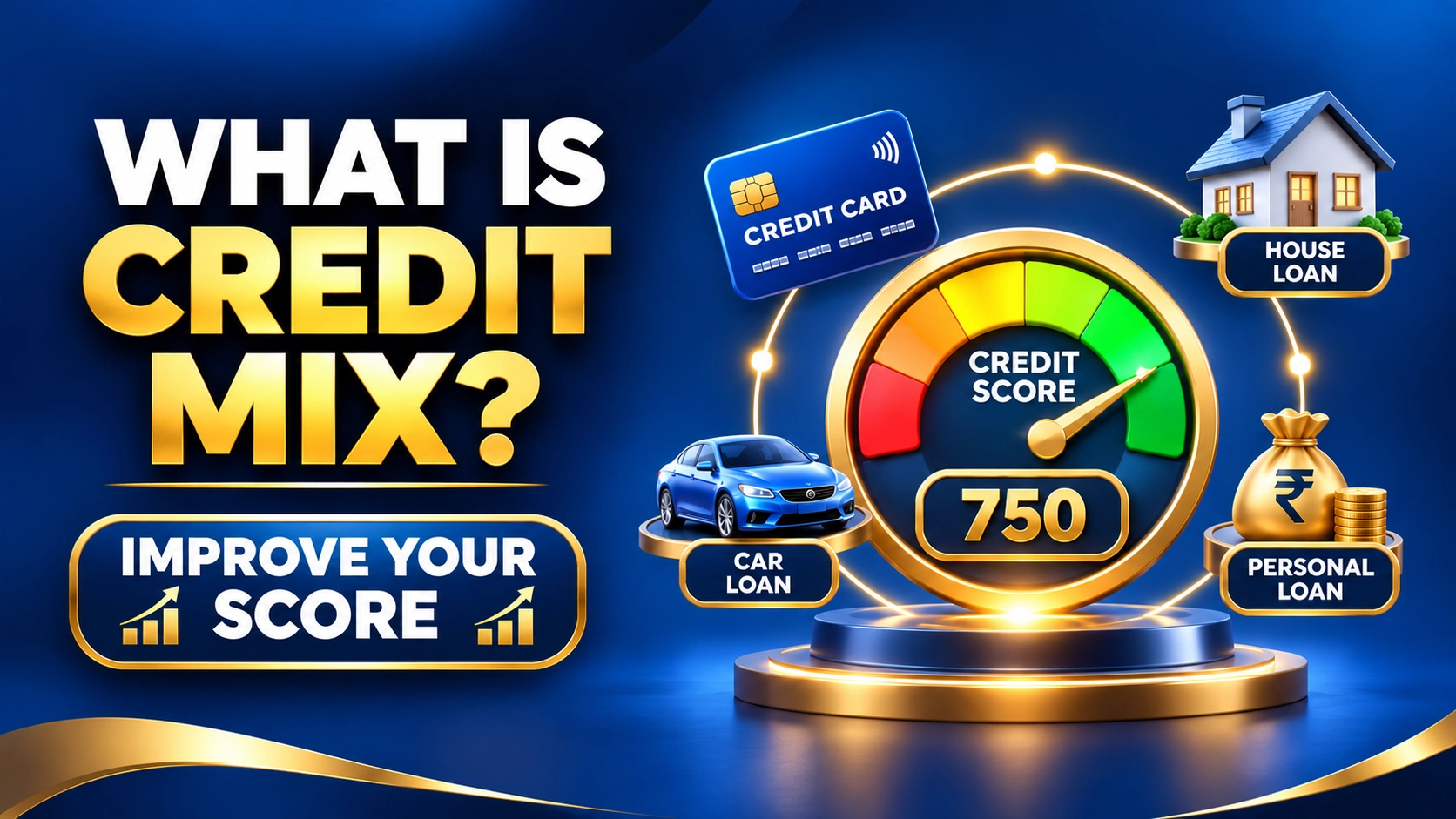
Creditworthiness is not just determined by your monthly bills. Sure, it might be the largest factor driving your credit score, but a credit score is largely a comprehensive number of multiple factors. This is why a credit mix is equally important. Just knowing that paying bills early will improve your score is not enough. Overriding features like a bad credit mix will simultaneously reduce your score and prevent you from increasing your CIBIL score to its maximum potential. These underlying problems will nullify the effect of good credit practices.
To improve your credit score, you need to
begin by understanding ‘what is credit mix.’ This is greatly transformational
to your credit profile.
What is credit mix? Types of credit
Credit Mix is an expression indicating the variety of credit accounts present on your credit report. It is a term used to describe the kind of borrowing relationship you have with your lenders.
In layman's language, "credit mix" means:
"Are you capable of handling different kinds of credit properly?"
The diversity of credit accounts is taken into consideration by the credit bureaus because each credit product has different requirements for repayment from the person taking the credit. Therefore, a person who manages several credit accounts might be considered better at handling credit accounts than someone who has just one kind of credit account.
It will be easier to define credit mix if you take a look at your credit report as a report card on your finances.
The lenders will ask the following questions about you:
- Have you
borrowed money in the past?
- Have you
been able to repay loans on time?
- Can you
manage fixed and revolving credit?
- Have you borrowed money in particularly large amounts?
Credit mix may form a component of all these
answers. All these questions begin with ‘what is credit mix’ at some point.
Types of credit
To have an idea of ‘what is a credit mix’, one
should understand the types of credit.
Revolving Credit
This type of credit gives the borrowers the facility to borrow money up to a particular limit over and over without having to apply for a new loan each time. The available credit limit keeps fluctuating depending on the utilization and repayments made.
Types of Revolving Credit
●
Credit cards
●
Secured credit cards
●
Overdraft facilities
● Lines of credit
Features
●
No specific loan amount
●
Flexible repayments
●
Credit limit refreshed after
repayments
● Interest charged on outstanding balance
For instance, if your credit card limit is
₹1,00,000 and you use ₹20,000 worth of it, your remaining credit will be
₹80,000, and your credit utilisation ratio will be 20%. Once you repay the
₹20,000 balance, your entire limit becomes available again.
Installment Credit
This type of credit entails borrowing a specified sum of money and repaying it through installment payments over a pre-set period of time.
Types of Installment Credit
●
Home loans
●
Personal loans
●
Auto loans
●
Educational loans
●
Gold loans
● Consumer durable loans
Features
●
Specific loan amount
●
Fixed repayment schedule
●
Predefined tenure of loan
● EMI calculation
Installment loans show how well the borrower
can handle long-term finances.
Secured Credit
The main condition and security in secured credit is collateral. The lender has a claim on the collateral in case of default. The chances of a lower interest rate in secured credit are much greater compared to unsecured credit, even with an average credit score. A secured credit may or may not require a good credit score as the main requirement, but the lender checks your credit score nonetheless.
Examples
●
Home loan
●
Gold loan
●
Loan against property
● Secured credit card
Benefits
●
Low-interest rates
●
Simple to approve
●
Increased borrowing amount
Unsecured Credit
There is no need for collateral in unsecured credit. Income, repayment ability, and creditworthiness are the key factors in getting approval.
Examples
●
Personal loans
●
Credit cards
●
Buy now, pay later credit
● Unsecured credit lines
Benefits
●
No collateral needed
●
Fast approval
●
Usage flexibility
How to improve credit mix?
Many people have the wrong idea that a credit
mix has to be forced on one’s portfolio or profile. One must be wary and
inculcate different types of credit slowly, naturally, and gradually. This
should include a loan and a credit card, for example. A natural credit mix is
much more effective and credible for building creditworthiness than a forged
one. This shows that a person is open to and has experience with, or
creditworthy habits for, all or multiple types of credit instead of just one. A
genuine credit mix indicates a healthier financial life and better
understanding of credit practices.
The percentage of its impact might be comparatively lower, but its proportionate impact is much more significant and creates an important gap.
The right way is to get a credit card first and use the revolving credit for a few months to a year before going for a loan. The decision to apply for an installment loan should only come at the cost of a genuine need or reason, rather than a forged one. Do not apply for a loan just for the sake of credit mix, because this will be more detrimental than beneficial.
Read More: Build credit with no credit experience
Tips to improve credit mix:
●
Use credit cards responsibly and
develop consistent good credit practices.
●
Paying off EMIs before their due
date works well.
●
Do not open multiple accounts at
once.
●
Check your credit report
regularly.
●
Keep your old accounts open whenever
possible.
●
Only borrow money when it is
really needed.
●
Keep your credit utilization low.
●
Open a loan account if you only
use cards.
●
Correct any mistakes in your
credit report quickly.
●
Diversify credit products slowly
and organically.
●
Do not stick to just one credit product just for the sake
of comfort or familiarity.
●
Think about credit discipline and
genuineness for the long run, not the immediate scores.
What is considered an optimal credit mix?
There is no universal formula for obtaining the best possible credit score. But there are some common elements of a good credit portfolio, which all financially strong individuals possess. The best possible credit mix comes from natural progression, free of unnecessary or forced engineering. The next step to understanding ‘what is credit mix’ is understanding the basics of an optimal credit mix.
An ideal credit portfolio includes:
1. At Least One Credit Card
It indicates the ability to properly handle
revolving credit.
2. One Major Installment Loan
Such as:
●
Home loan
●
Vehicle loan
● Education loan
3. Long credit history and age
A longer history of payments usually indicates
scoring stability.
4. Minimally Relying on High-Risk Credit
Too many unsecured loans indicate possible
financial problems.
Credit Portfolios With Good Credit Mixes
Profile #1: Young Professional
➔
One credit card
➔ One education loan
It is a sound initial credit portfolio.
Profile #2: Professional
➔
Two credit cards
➔ One vehicle loan
Indicates experience with revolving and installment loans.
Profile #3: Experienced Borrower
➔
Two credit cards
➔
Home loan
➔ Vehicle loan
Indicates solid experience in borrowing if
handled properly.
Factors that affect credit score: Impact of credit score
Understanding “what is credit mix” alone would not be sufficient since there are other aspects of credit scoring that must be considered as well.
Payment History
This is often seen as the most significant aspect. Late payments cause defaults to appear on your credit report and lower your credit score.
Paying regularly:
●
Loan EMI payments
●
Credit card payments
● Credit card payments
would make up a good repayment history.
Credit Utilization Ratio and amounts owed
This is proportionate to how much credit is available for use after deducting your debt.
●
Credit limit: ₹1,00,000
● Amount spent: ₹25,000
Credit utilization: 25%
Generally, lower credit utilization is more
favorable, with a maximum of 30%.
Length of Credit History
Credit history becomes a more substantial
basis when the history is long. Positive credit histories become a good
addition to your credit history. Your oldest, newest, and average age of
accounts are what is considered here.
Credit Mix
What is credit mix? Installment and revolving
credit should balance out each other in building good credit.
Number of Credit Applications
Applying often will lead to multiple hard inquiries. It will show that the borrower is desperate and cause immediate 5 to 10-point score drops per inquiry. Note that soft inquiries do not affect credit score.
Conclusion
Knowing “what is credit mix” would enable people to have a better credit profile. Credit mix is the different types of credit accounts found in your credit history. These may be revolving accounts like credit cards and installment credit like home loans, car loans, and personal loans.
The best way to have a good credit mix is not to take unnecessary loans but to responsibly manage credit products that you actually need. The right balance of revolving and installment credit, along with regular payments, low credit utilization, and financial discipline, would help in building a better credit profile.
‘What is credit mix’ is best answered when you
create a portfolio of using multiple financial tools with the condition that it
is organic and natural.
FAQs
1. Is it important to take several loans to diversify the credit mix?
No. It is not recommended to take unnecessary
loans just for credit mix improvement. Credit mix should evolve gradually from
borrowing requirements.
2. What does an optimal credit mix look like?
Optimal credit mix usually consists of proper
proportions of revolving and installment credit and is characterized by
long-term payments and responsible financial behavior.
3. Will one credit card be enough for a credit mix?
Maybe not. One credit card will be helpful for
the development of credit history. Nevertheless, a more diverse credit mix will
be useful to demonstrate the responsibility of a borrower.
4. Is it bad to close old accounts in terms of credit mix?
Yes. The closure of old accounts may worsen
credit mix.
5. Does credit mix play a role in approving a loan?
Yes. Credit mix, along with payment history,
income, debt obligations, and credit score, is a factor that lenders consider.