

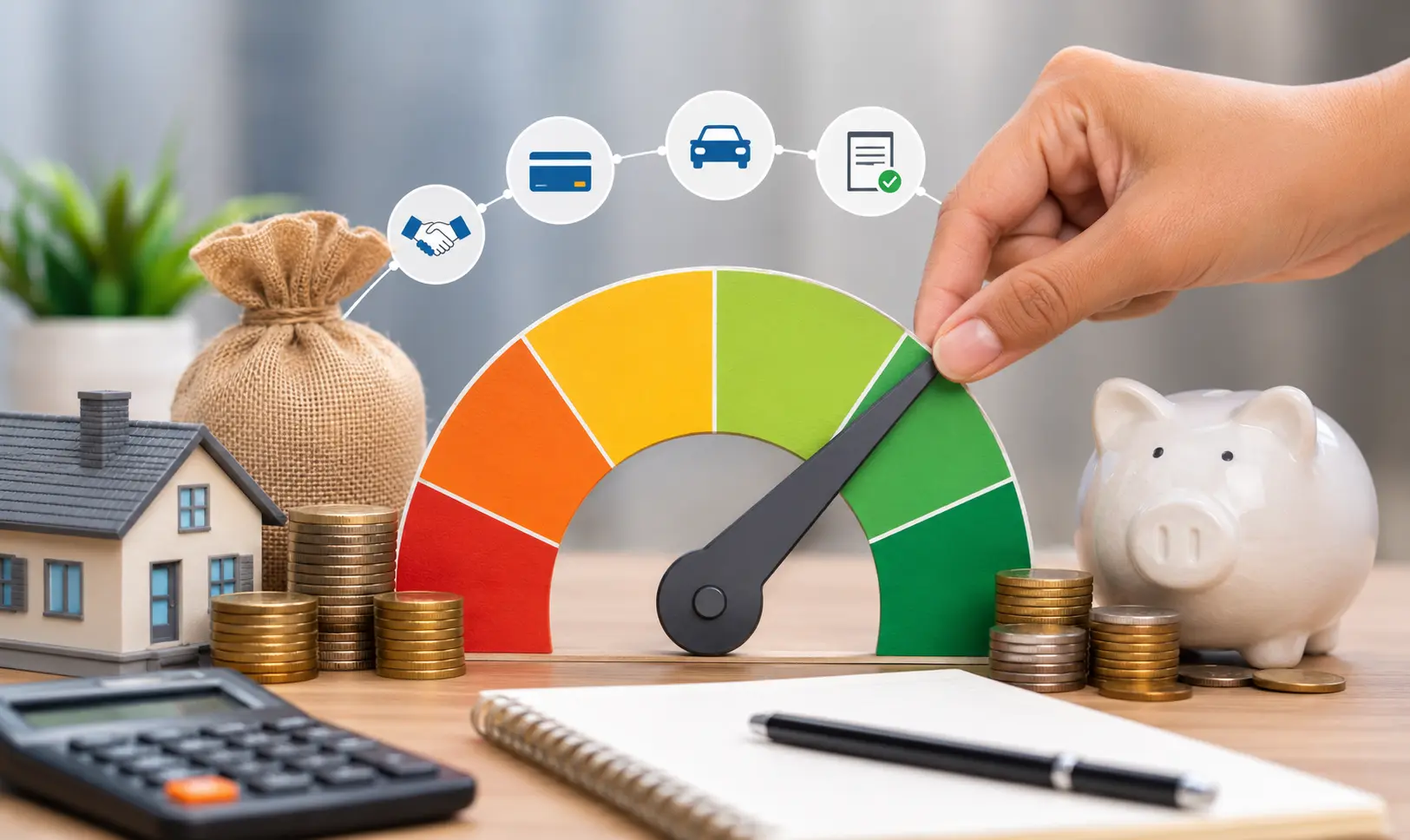
‘What is a good credit score and how to maintain it’ is a question people are never tired of asking. It is an important aspect of protecting their financial life. By understanding actions like the credit utilisation ratio and timely payments, dispute raising for errors, and pay later options, you can maintain a good credit score.
What Is A Credit Score?
A credit score is a 3-digit number that informs your lender how responsible you are towards paying back your debts on time. Credit Bureaus like TransUnion, CIBIL, and Experian check your financial data like transactions, credits, and EMIs to assign you a score between 300 and 900. 900 is an extremely rare score that you only get from years of steady, hard discipline.
Your credit score is based on your payment and transaction history, credit utilization ratio, old and new cards, and credit mix. Taking credit actually builds your credit score if you actually repay it within the agreed terms. Read this blog to learn practical tips on what is a good credit score and how to maintain it.
What is Considered A Good Credit Score?
All Credit scores are graded on a scale, ranging from top tier, excellent, good, fair, and poor. This establishes your financial credibility, trust with lenders, and responsibility, which allows and reassures the banks and lenders to give you credit and receive returned payments. Refer to this chart for a clear understanding of exactly ‘what is a good credit score’.
|
CIBIL Score |
Tier |
|
800-900 |
This is the
rarest and top tier CIBIL Score. Achieving this is very tough, and these
individuals avail the most benefits compared to other tiers, like the fastest
approvals, higher credit limits, longer loan tenures, and many other credit
rewards. |
|
750-799 |
This is the
excellent and achievable range; this shows the person as financially
responsible and demonstrates a healthy credit score and history. |
|
670-739 |
This is the
good CIBIL score range, which establishes trust while positioning you as a
low-risk borrower to the bank and lenders. |
|
580-669 |
This is the
fair tier of the CIBIL Score range, which makes this threshold acceptable,
but at much stricter terms, and it doesn’t meet the lender or financial
institution’s expectations. |
|
<580 |
This is the
poor CIBIL score range, which signifies many payment defaults, messy
financial habits, or over-dependency on credit. This is a red flag for
lenders and faces a high chance of rejection. |
Why Is A Good Credit Score Important?
A credit score affects every aspect of your life, whether knowingly or unknowingly. A good credit score really matters to your financial institution. The perks of having and maintaining a good credit score are listed below:
● Loan Approval: You are highly eligible for loan approval to the bank if you have a good credit score. You might get pre-approved or instantly approved loans.
● Lower interest rates: If you are not among those within the desired CIBIL score threshold, you might immediately receive higher interest rates. Even a 0.5% difference in the rate can add up to a lot of money over the years, so maintaining a good credit score is extremely important.
● Easier Access to premium rewards and credit cards: A good credit score is important when a bank determines whether or not your credit card application should be approved. The limit of your credit card also depends on this factor. The better your score is, the better exclusive rewards and offers you get access to. You might even receive a pre-approved loan or credit card.
● Longer
tenures and faster processes: With a good credit score,
you are eligible for longer interest tenures and even faster processing of your
loan at the bank, placing you on priority.
6 Easy Ways to Maintain a Healthy Credit Score
Effective Credit Score Management comes from
informed and disciplined behavior. It is not just score monitoring, but a broad
professional skill that requires precise analysis. These practices explain what
is a good credit score and how to maintain it.
Pay Your Bills On Time
Lenders and Banks constantly monitor your
activity and require you to be financially responsible towards your debts and
EMIs. A single missed payment instantly puts a risk on your score. You should
be informed that such activity within 12 months is most likely to be kept on
the radar.
If you pay all your debts in full, it might even create a positive impression on your bank. Your payment history accounts for about 30% of your credit score under the FICO model. Read in detail about such credit score factors and how to maintain a good credit score.
Keep Your Credit Utilisation Low
Credit Utilisation Ratio is an important factor. You should not use more than 30% of your available credit. This is interpreted as a factor that demonstrates how effectively you are using your finances and are not having trouble managing multiple debts.
Monitor Your Credit Report Regularly
This is an effective method to stay informed and vigilant of crucial financial habits. Without keeping an eye on how your actions are being recorded in your credit report and in what portions, it is hard for you to plan how to maintain a good credit score. One of the most important yet most neglected good credit score tips is checking your reports for errors. Your details or transactions likely show an error, which can impact your credit score. If you raise a dispute and get this corrected, you might as well experience a credit score boost.
Avoid Applying For Too Many Loans or Credit Cards
Although having more than one credit card is good for your credit health, having too many credit card applications can miscommunicate to the bank authority that you are struggling with cash or debt. These checks are called hard inquiries or hard pulls that instantly lower your credit score by 10 points. Therefore, watch out for agencies that might want to issue your credit report.
Maintain Older Credit Accounts
Even if you stop using one of your old cards, you should still consider keeping it, as it adds to your current payment history, which simply means additional points without doing a single thing. Closing old accounts and cards can trigger a credit balance and shorten your credit history for reporting purposes.
Use Different Types of Credits Responsibly
Having a healthy mix of installment loans, credit cards, and loan interest demonstrates your efficiency in managing different debt categories. Diversify with purpose should be your aim. Even though significant, credit mix accounts for a lower percentage that impacts your credit score among other factors– 10%.
Common Mistakes That Can Lower Your Credit Score
Not everyone is informed about how to maintain a good credit score. Therefore, the mistakes listed below are common among borrowers.
- Neglecting your Credit Score Check
Not checking your credit score and report will keep you dangerously uninformed of your financial health and potential future harms. This will also keep you in the dark about common errors in your report and details. Rectifying these errors is immediately critical to your credit report. To know what is your credit score, check your comprehensive credit report today.
- Missed Payments
Missed payments are the largest factor in your CIBIL Score. A single due payment within 30 days can lower your score instantly. Not to mention, it stays within your records for up to 7 years. You cannot even effectively overshadow it by making regular on-time payments, as it can still stay impactful behind-the-scenes.
- Credit Card Billing Cycle
Banks and the scores are not simply looking at the terms “paid on time” or “late.” The lenders and the scores also recognize patterns. One such oversight is statement-date billing. If you pay your bill after the statement closes and before the due date, your balance could be quite high at that point and thus increase your credit utilization ratio for the month, which lowers your score. Paying before the statement closes helps lower your credit utilization immediately.
- Avoid Unnecessary Piling Up of Applications
Ensure that you don’t blindly apply for more credit cards and loans over a small period of time. It catches the eyes of the lenders and prompts them to pull one or more hard inquiries on your profile, which affects your report and score. Don’t assume that having and applying for multiple credit cards all at once will dramatically benefit your credit score.
- Piling Up Collections and Small Debts
Small Delinquencies and repeated, late small payments can create a bad impression and create derogatory entries. Not just small debts, but events like bankruptcy, foreclosure, and repossession can have adverse effects. Manage your credit card debts effectively and judiciously.
Conclusion
A one-sentence answer to ‘what is a good credit score and how to maintain it’ is encapsulated in your credibility and sticking to healthy financial habits. It is a broader concept that doesn’t summarise within just one term. You have to incorporate habits like regular credit score check, a natural credit mix, and timely repayments. Now you know everything about a healthy credit score and good credit score tips.
FAQs
1. What is the best way to maintain a credit score?
The best way for credit score management is to maintain punctuality in payments, apply for credit naturally and meaningfully, keep your credit utilisation low, and monitor your credit report regularly.
2. What is the CIBIL score range?
The CIBIL score range is calculated between 300 and 900. It is assigned a scale as given below:
800-900: Extremely rare, top tier
750-799: Excellent, and receive most bank
benefits
670-739: Very Good, low-risk tier
580-669: Fair range, but less favourable
negotiations
<580: Poor, might face rejections
3. Does late payment drop my credit score?
Yes. Late payments can stay in your credit report even after you pay them back. A late payment can lower your credit score by 50-110 points. These records are visible to the credit bureaus for the long term.
4. What are the benefits of an
ideal credit score range?
An ideal CIBIL score is 750-900. It is considered excellent and places you as a trustworthy borrower to lenders and banks. There, you are placed on priority for their loan and credit benefits, like faster approvals, lower interest rates, longer loan tenures, pre-approved credit cards, and exclusive rewards.
5. How to make credit mix better?
If you want to demonstrate a healthy credit mix but don’t want to make it look too forced, you can follow the following steps:
● Only
take credit that you need for a natural and meaningful credit mix.
● Ensure
a balance of revolving credit and installment loans.
● Don’t
be hasty in applying for new credit or a loan. Take your time to naturally
incorporate a healthy credit mix.
● Reserve
your closed accounts instead of removing them.